Category: Donations

  • The Garden Stop

    I love politics and social policy. A good debate invigorates me. I’ve earned Master’s degrees in Public Administration and International Studies.  But, I have to admit that the political hatred that I am now faced with every day on TV and in public has me spending a lot of time whimpering to myself under a blanket in a dark quiet room. No matter if I think the issue is something that must be addressed immediately or something that is ridiculous, I am overwhelmed and exhausted with the incessant intensity emerging from the matter. However, there is one venture that Stewart and I fell into a few months ago that has unexpectedly given us hope for humanity.

    THE GARDEN STOP

    The Garden Stop

    It started in the Spring. We decided to stick our hands in the earth for some garden therapy. Soon our overly successful seedling germination led to a need to thin out our little plants. We didn’t have the heart to toss those healthy plants we culled, so we transplanted them into 2-4 inch pots. This resulted in a dilemma of many more plants than garden space. We decided to set up a table at the end of our driveway, put the plants on the table and offer them to the community in the hopes of encouraging people to grow their food and/or learn about gardening. Times are hard, so we hoped that those who couldn’t afford the cost of a plant in a garden center would claim some of these little guys for their own. Stewart made a sign for our newly named “Garden Stop” that stated the plants were available for donation or free for those in need. The plants began to disappear and sometimes change or dollar bills appeared in the red Folger’s can we left on the table. We considered The Garden Stop a success, began germinating more seeds and put additional plants appropriate for the sowing period on the table.  We put a bulletin board nearby with basic planting instructions for some of the more unusual plants and our email address for any questions.

    When it came time to begin planting for a late fall harvest, we added a sign stating that if these plants were planted now, they would be ready for harvest in October. We were also able to put some early pumpkins and fresh herbs on the table. The fact that we were seeing stuff disappear made us feel that we were communicating with the community in a positive way, which was more than enough thanks for us. 

    But, then, other things began to happen. People began honking at us and waving as they went by.  Thank you notes and cards appeared in our donation box.  A neighbor left $20 in the Folger’s can and walked away without a plant, simply because he wanted to support what we were doing (this was considered a failure.  We’re in the plant business, folks).  An elderly couple knocked on our door asking if they could buy some of our home grown vegetables (We did not grow enough this season to provide for others… next year, maybe).  A woman approached us, asking if she could donate a handful of plants to the Garden Stop, so we added her plants to the table and they disappeared into the wilds of Tennessee as well.  On our way out last week, we noticed a small patio table and several beautiful large plastic pots filled with garden soil and gravel left near our “recycle your pots here” sign.
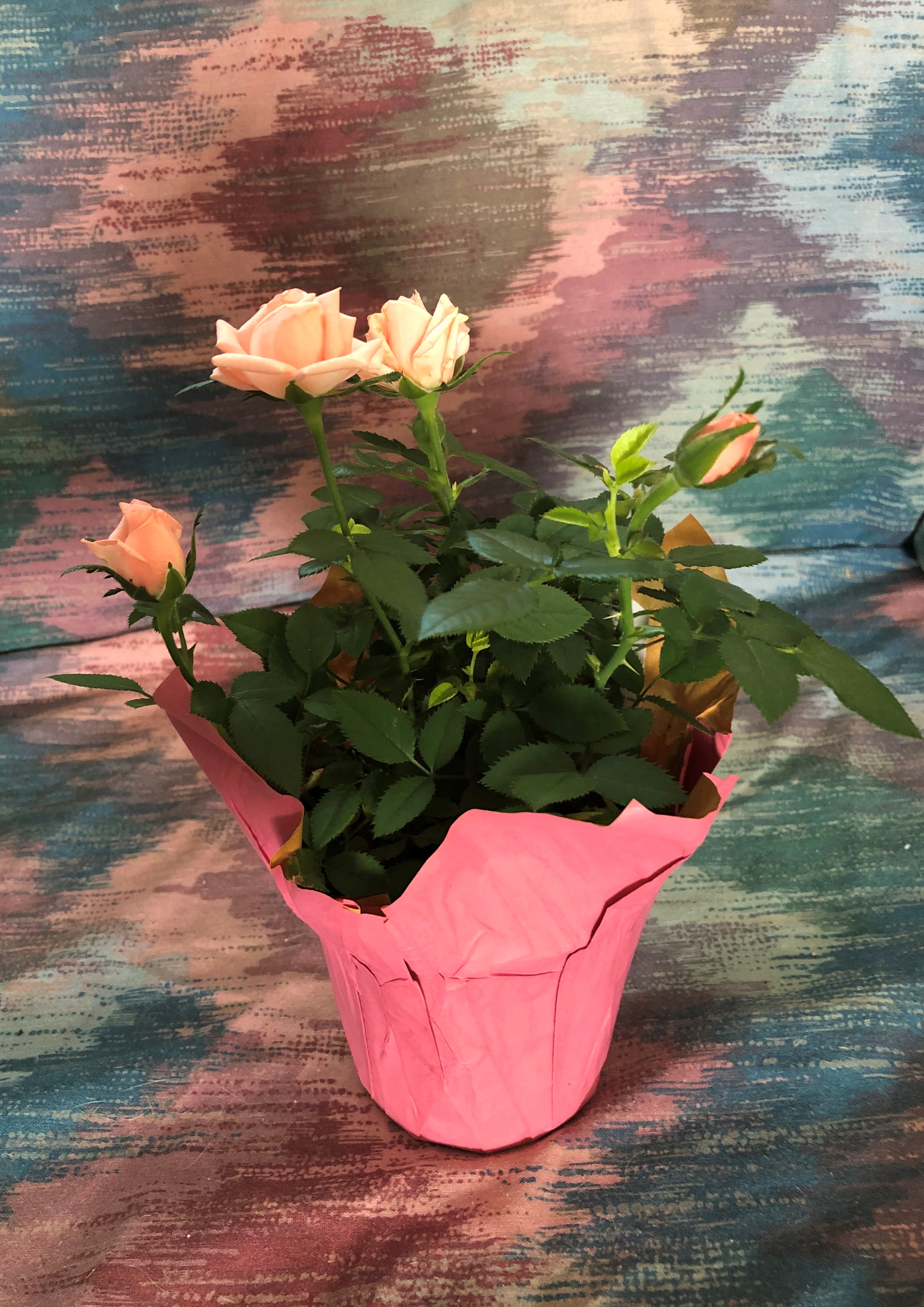
    And yesterday a young woman knocked on the door. She said, “My Mother and I pass your Garden Stop every day.  It makes us feel happy seeing your sign and the plants and we wanted to give something to you to show our appreciation.”  She handed us a gift-wrapped pot of miniature roses as she gestured towards her car where a woman waved wildly with a broad smile (we assume this was “Mother”).

    These intentional actions have gone far to remind me that although 2020 unearthed some of the worst of humanity, the best most caring of humanity is out there also. So my friends, fight the good fight, keep your head down, or stay home. Do what you must do to keep your sanity.  And as we approach Tuesday, November 3rd, please please please remain vigilant and do what you can to protect your friends, family and yourself. No matter how the election lands after the dust has settled, “Fasten your seat belts– it’s going to be a bumpy night.”

  • What’cha doin’?

    Julius teaching a class on irrigation scheduling.
    Julius teaching a class on irrigation scheduling.

    When people hear we volunteered for the Peace Corps, we are often asked what we’re going to do in Nepal. Our answer, “We aren’t exactly sure,” is usually met with a blank or puzzled look, followed by something like ‘Wow…what an adventure!’, or ‘That is a long way to go… especially when you don’t even know what you are doing.” Some people even go so far to comment, “So… if they are sending unprepared people over, who don’t even know what they’re doing, do you really think Peace Corps makes a difference?” Our response varies from person to person, but the definitive answer follows:

    The Peace Corps Nepal Volunteers all work under the umbrella of “Food Security”, putting most of their energy into projects that focus on improving agriculture, nutrition and hygiene in rural areas of Nepal. Malnutrition in Nepal is among the highest in the world. According to World Bank, over 40 percent of Nepali children under five are stunted (in some far western areas of Nepal, the percentage is over 60). Nutrient deficiencies are severe. In particular, 46 percent of children 6 months to 12 years, 35 percent of women of reproductive age and 48 percent of pregnant women are anemic. Malnutrition affects everyone there. It slows economic growth and perpetuates poverty through direct losses in productivity from poor physical status, and indirect losses from poor cognitive function, and increased health costs.

    “But won’t Peace Corps put you into a specific job with an actual ‘job description’ geared toward increasing food security?” Some volunteers do land in positions that have *some* predetermined parameters and tasks. But most Peace Corps Volunteers only receive general training for the sector they are assigned. (in our case, Stew: Agriculture, Vee: Health). In developing a plan (a job) for an individual volunteer, the mix of the background/skills of the volunteer, the needs of the community they are assigned to, and the capacity of the host population must be taken into account. Each community has unique needs that the volunteer has no way of comprehending without interacting and integrating within the culture and community. During the first year on-site, the volunteer looks for a project that they can successfully implement, that fulfills the needs of the community, and that is supported by local leaders and motivators willing to implement/take over/maintain after the Peace Corps Volunteer has finished service.

    Nepali farmers creating a vegetable seedling nursery

    Peace Corps Volunteers serve in their community for only two short years. The volunteer may be able to keep a project afloat with their own enthusiasm during the time they are on-site, but for the project to be sustainable after the volunteer leaves, the community must be committed to the project…..it must be THEIR project… invested in and owned by them. They must see the worth and be willing to push forward with the project far into the future.

    Peace Corps Volunteers can provide project research, train participants, assist in obtaining financing, and work alongside the host towns. But, the project must belong to the community. We as Peace Corps Volunteers have ideas, hopes, and confidence in our applicable skills before we are assigned to a post, but there is no way that we can know what the community members truly want and need to happen until we are integrated with our community.

    A Peace Corps project example: Julius, a current Nepal Peace Corps Volunteer, is working on an irrigation project for his host community. He came to Peace Corps with a Master’s Degree in Agricultural Engineering almost a year ago, but only recently started a project in his village to build an irrigation system for increased water access for higher vegetable production. By developing access to water during Nepal’s dry season, farmers in Julius’ host town will have the ability to use alternative farming methods and grow more vegetables year round, which will potentially improve the nutrient intake of the citizens. Also, with more varieties of crops, farmers will be able to sell more products and generate a higher income for their households. Julius didn’t just jump into this project when he first arrived at his post. The first few months he spent getting to know the town’s citizens, finding out how they farmed, and what would increase their crop production. Then he spent some time training the farmers in making seedling nurseries. He worked to become a part of the community. His work slowly resulted in being able to create a committed farmers project group. (who happen to be all female farmers) http://www.jdnepalilife.blogspot.com/2014/02/my-first-three-months-at-site-life-in_25.html

    Once the project was in motion, Julius needed to determine what actions, trainings and materials were needed to accomplish the project, as well as the time, energy, and money required. In addition… where would the materials come from? (No Home Depot down the street)…..where would the money come from? (a big portion of the money and labor is required to come from the community, but assistance must be gained from others also)…..and were there other volunteers or groups working on similar projects? (the more the merrier, so networking is required) http://www.jdnepalilife.blogspot.com/2014/07/a-low-cost-method-to-survey-landscape.html

    Now details are in place, time line has been created, and project grant proposal has been approved by Peace Corps. Next up: obtain the money and materials, coordinate the work plan with those willing to contribute, research the trainings and prepare lesson and direction plans(which must be translated and taught in Nepali).

    Interesting project process, yes? For those of you who would like to give Julius and this committed group of female farmers a hand with this project in order to improve lives in their Nepal community and create a ripple effect of more positive changes, consider donating a little cash to this worthy cause…..here: https://donate.peacecorps.gov/index.cfm?shell=donate.contribute.projDetail&projdesc=14-367-003

    Peace Corps Volunteer projects are a great place to donate. Especially if you want to ask questions of or have interactions with the people actually using your donation money. If you connect to a specific Peace Corps project through a volunteer’s blog or facebook page, you can usually see who is coordinating the project, plans for how the money will be used and often, how much money is needed for the project. Because of the information shared by most of the volunteers, you may even be able to watch the project in process on-line and see the results of your donation. Skip a couple mornings of Starbucks and send your money to Nepal……watch the results. Seriously…….a little bit here in the U.S. goes much further in Nepal. And they do need it. Let’s get it done. Please…